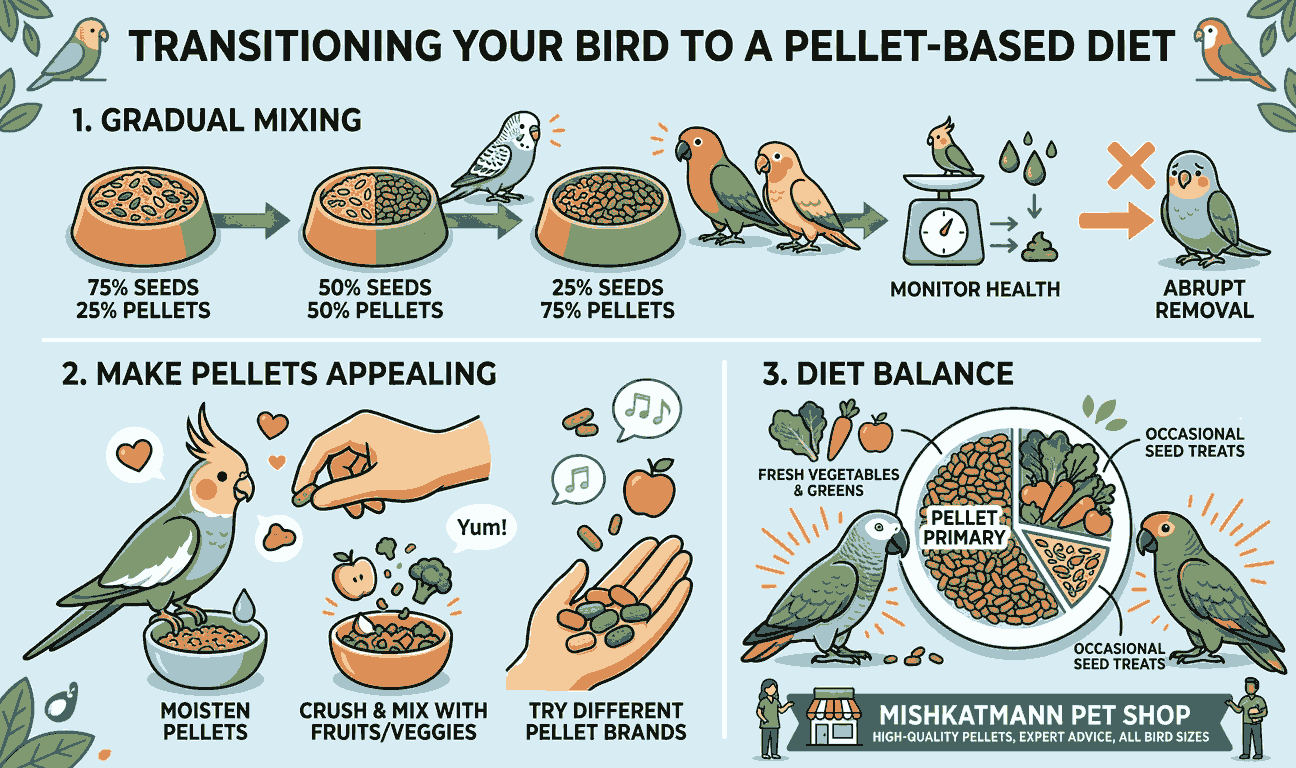
If your bird has been eating a seed-only diet, you may have already heard from a vet or fellow bird owner that pellets are generally the healthier long-term choice. Seeds
When most people think about caring for a pet bird, they think about food, cage size, and socialisation. UV lighting rarely makes the list — and yet it is one of the most critical and most overlooked aspects of keeping a bird healthy indoors.
At Mishkatmann Pet Shop, we want every bird owner to have the full picture. Here’s what you need to know about UV lighting and why it matters so much for your bird’s wellbeing.
Why Birds Need UV Light
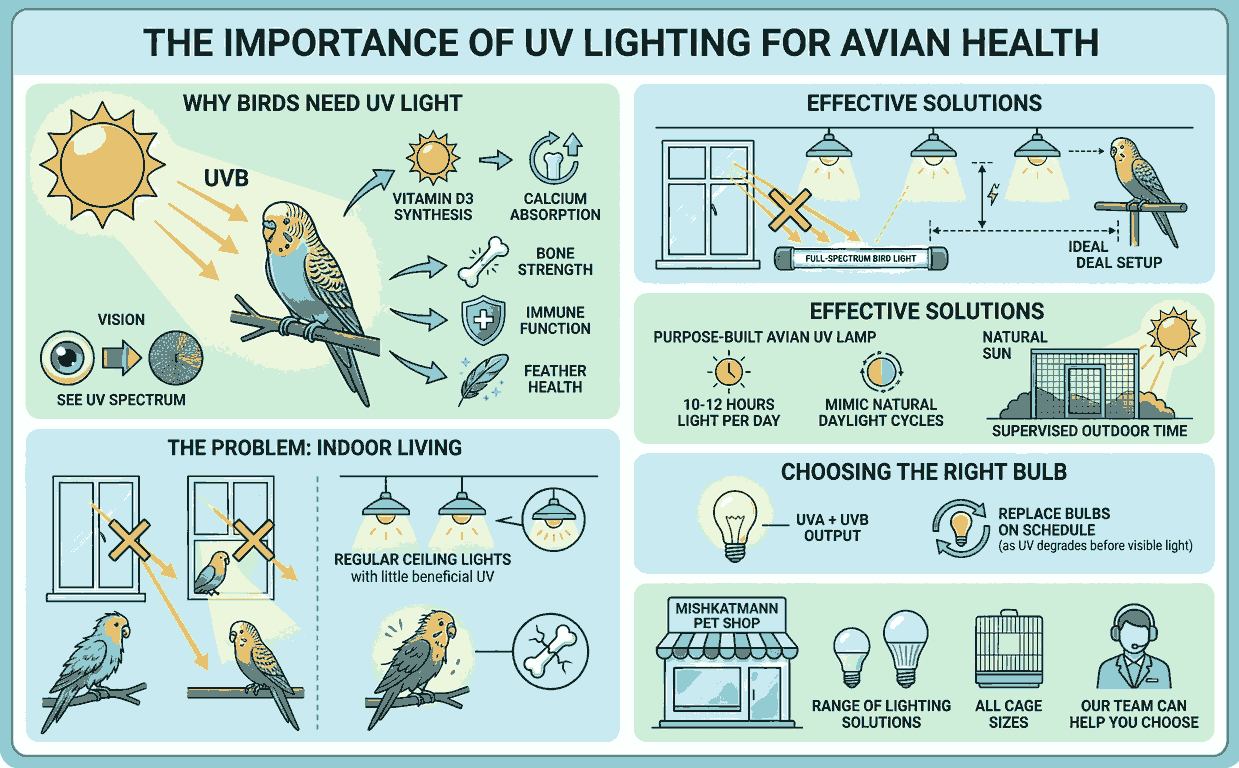
In the wild, birds spend hours each day in natural sunlight. Sunlight — specifically UVB radiation — enables birds to synthesise Vitamin D3, which is essential for calcium absorption, bone strength, immune function, and feather health. Without adequate UV exposure, birds can develop serious deficiencies over time, even if their diet appears balanced.
Beyond physical health, UV light also affects a bird’s vision and mental state. Birds can see into the ultraviolet spectrum, meaning they perceive the world in ways we simply cannot. Natural or full-spectrum lighting makes their environment richer, more stimulating, and more natural.
The Problem with Indoor Living
Standard glass windows block virtually all UVB radiation. This means that even a bird sitting in a sunny windowsill all day is receiving almost no beneficial UV light. Regular household lighting does not compensate for this either. Over months and years, the effects of UV deficiency can accumulate quietly, often showing up as brittle bones, poor feather condition, weakened immunity, or hormonal imbalances.
What You Can Do
The most effective solution is to use a purpose-built avian UV lamp or full-spectrum bird light. These bulbs are specifically designed to emit the UVA and UVB wavelengths that birds need. They should be positioned at an appropriate distance from your bird’s perch — not so close as to cause heat stress, but close enough to be effective. Most bird care specialists recommend 10 to 12 hours of light exposure per day to mimic natural daylight cycles.
If your climate allows, supervised outdoor time in a secure aviary or on a perch in direct sunlight is also enormously beneficial, even just a few hours a week.
Choosing the Right Bulb
Not all “full-spectrum” bulbs are created equal. Look for bulbs that specifically state UVA and UVB output, and replace them according to the manufacturer’s schedule — UV output degrades long before the visible light does, so an old bulb may look fine but provide little benefit.
At Mishkatmann Pet Shop, we stock a range of avian lighting solutions suitable for all cage sizes. Our team is happy to help you choose the right setup for your specific bird species and living environment. Your bird’s health is worth the investment.